
Royal Aircraft Factory F.E.2b: a 1917 propeller
A single piece, and it is the oldest in the collection: a wooden propeller made for a British biplane of the First World War, with the date it was made pressed into it. 11 April 1917.
The pieces that come from it
1 in the catalogueAlmost every piece in this collection has a deduced provenance: you measure, you compare, you reason. Not this one. On this propeller it is written who made it, for which aeroplane and when. It is the best documented piece we have, and for a simple reason: in 1917 propellers were signed.
What aircraft it was
The designation F.E. stands for Farman Experimental, after the configuration invented by the Farman brothers: the propeller not in front of the engine but behind it, pushing. It was not an affectation. In 1915 there was as yet no reliable synchroniser on British aircraft to let a machine gun fire through the propeller disc without shooting it off. By putting engine and propeller at the back, the nose stayed clear and the observer could fire forward with nothing in the way.
The F.E.2a prototype flew on 26 January 1915 and entered service in May. Of the main version, the F.E.2b, 1,939 were built. It carried a Beardmore engine of 120 horsepower, later 160, and a fixed-pitch four-bladed wooden propeller. The wingspan was 14.55 metres.
The date
Pressed into the propeller is the date 11 April 1917. For this aircraft, that date falls in months of change.
In the spring of 1917 the F.E.2b was changing trade. The new generation of German fighters had outclassed it, and a pusher biplane of a hundred and sixty horsepower found it ever harder to defend itself in daylight. It was not scrapped: from February the first squadrons flying it by night were formed, as a light tactical bomber, and it flew by night until August 1918.
This propeller was finished in those very months, while the aeroplane it was made for was changing trade. We do not know whether it flew, nor whether by day or by night, and without a document we will not write that we do: we know the day the wood was stamped, and for an object of this period that is already far more than is usually known.
What is written on it
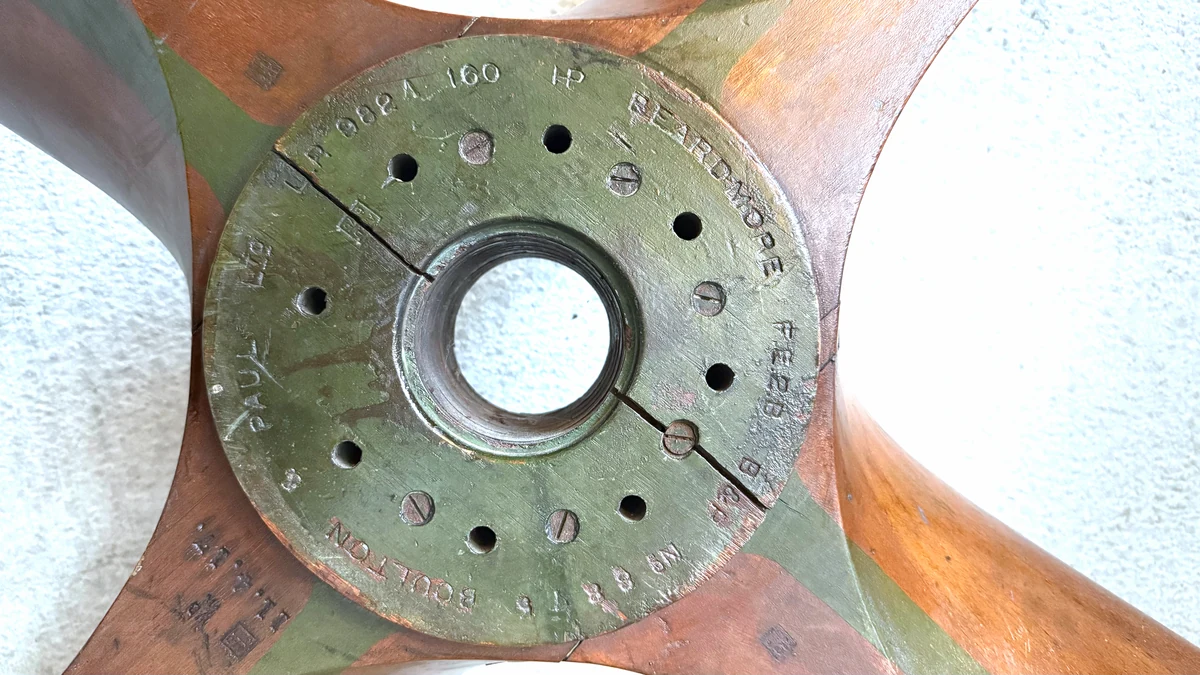
On 5 September 2026 the propeller was photographed close up, and it turned out it does not carry only a date: it carries everything. On the hub, stamped in a circle, you can read:
- BOULTON & PAUL Ltd — the maker, of Norwich, one of the private firms that built the F.E.2b, designed by the Royal Aircraft Factory;
- T.P. 902 A — the propeller's drawing number;
- 160 H.P. BEARDMORE — the engine it was made for;
- F.E.2B — the aeroplane, written out in full on the piece.
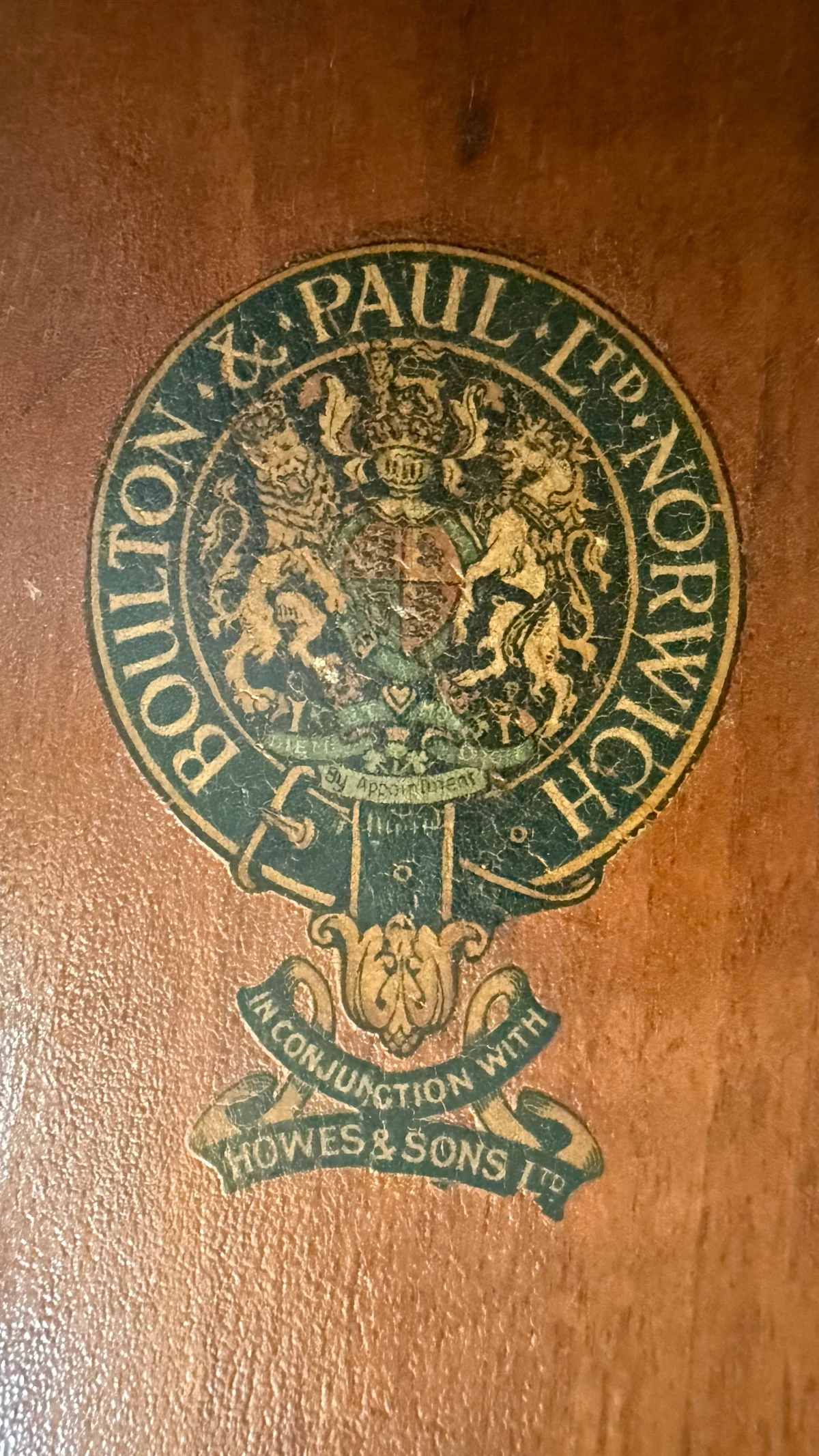
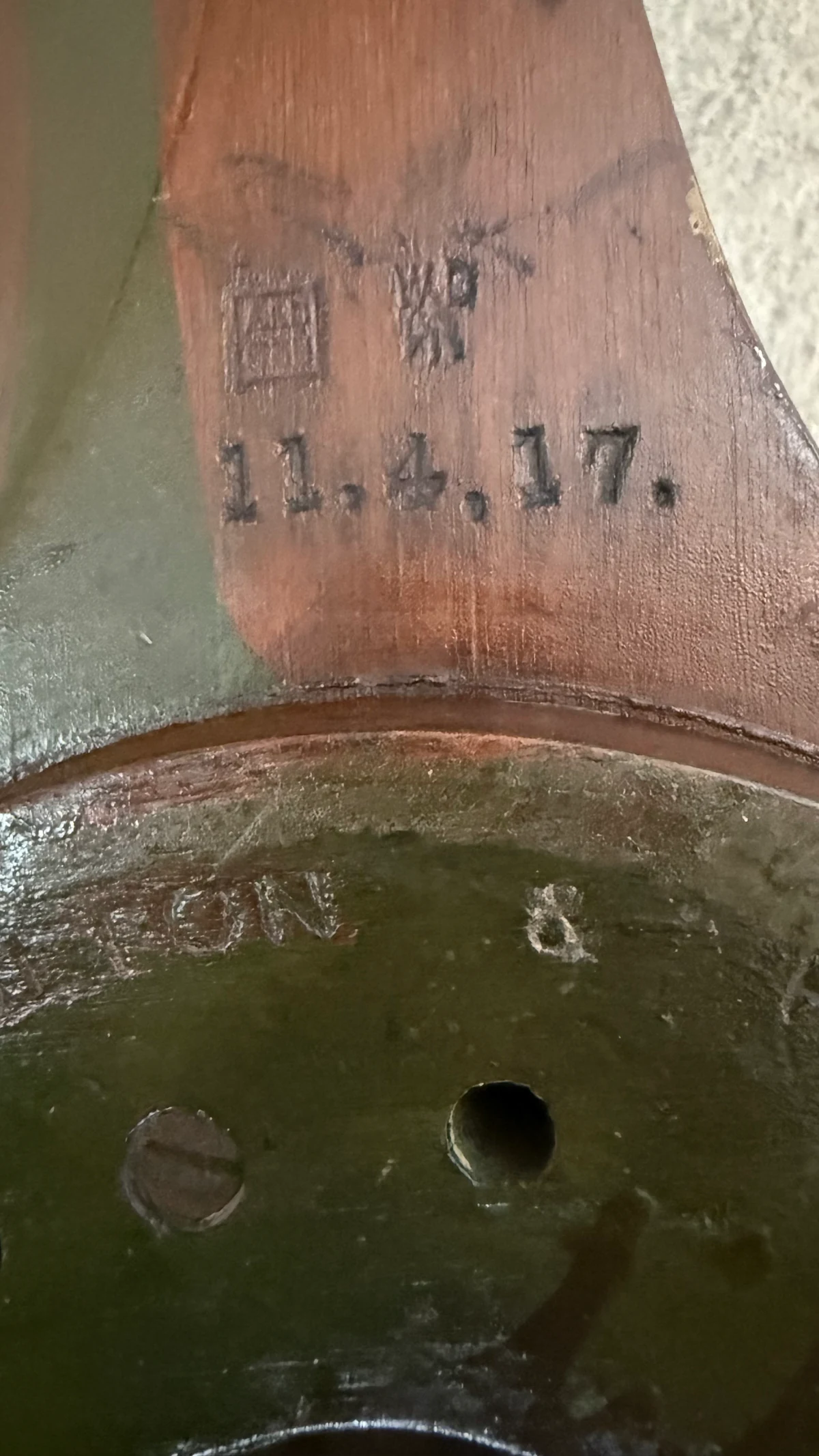
On the wood, towards the root of one blade, is the date, 11 . 4 . 17, with two inspection stamps beside it. And on the flat side of one blade the original transfer is still there: the royal arms, the words BOULTON & PAUL Ltd · NORWICH and above, on a ribbon, in conjunction with HOWES & SONS Ltd.
The date reads in the British order, and it is 11 April 1917. It is no longer a deduction from the type of aircraft: the maker is written on the object and is British, and in the United Kingdom the date is written day-month-year. The blades are four, as expected.
It is the most documented piece in the collection. On no other can you read together the maker, the drawing number, the engine, the aeroplane and the day.
Which is why this propeller is left as it is: it is worth what is written on it, and taking that away would take away the object and leave the propeller.
The evidence
The plates and markings photographed on the pieces. They are what this page rests on: where there is no plate, the page says so. The serial number visible on each of them belongs to the component that was photographed: every piece carries its own, and it is written on the certificate that comes with it.